Our Product
Ein fehlendes Puzzleteil in der Life-Science-Forschung
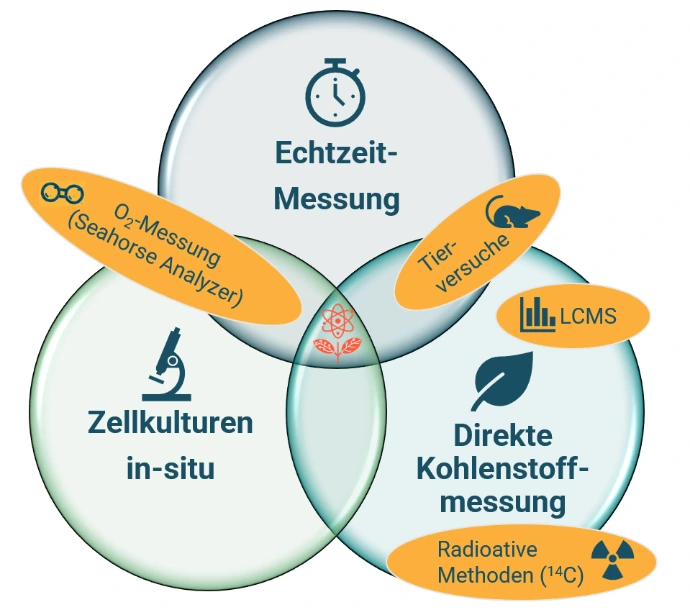
In the last 100 years, the distribution of causes of death has changed significantly. While infectious diseases were the predominant cause in the past, today it is non-communicable diseases that make up the majority. Metabolic diseases play a central role in this. Cellular metabolism has proven to be a crucial biological process that influences the onset and progression of diseases as well as the response to therapies and their effectiveness. This gap between biological relevance and analytical performance, marked by the red star in the center of the three circles, represents a structural limitation in modern life science research. It reduces experimental throughput, increases costs, decreases reproducibility, and contributes to inefficient resource utilization. Existing approaches have significant limitations, including time delays, dependence on animal testing, the impossibility of conducting measurements in cell cultures, the indirect derivation of metabolic activity, extractive methods, and lack of high-throughput capabilities. As a result, there is a clear market gap for technologies that allow direct tracking of nutrients along the TCA cycle. We see our product as the missing puzzle piece that closes this gap. Because apart from the Tiresias platform there is currently no solution that allows for the direct determination of which nutrient is being metabolized by a cell at a given time.
The missing piece of the puzzle in life sciences research
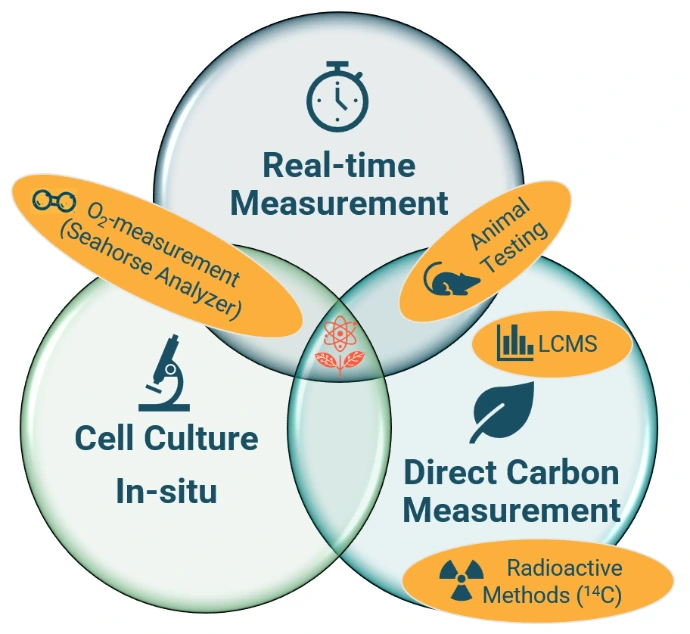
Over the past 100 years, the distribution of causes of death has changed significantly. Whereas infectious diseases were once the dominant cause, non-communicable diseases now account for the majority, with metabolic disorders playing a central role. Cellular metabolism has emerged as a critical biological process that influences the onset and progression of disease, as well as therapeutic response and efficacy. The gap between biological relevance and analytical capability, represented by the red star at the center of the three circles, constitutes a structural limitation in modern life sciences research. It constrains experimental throughput, increases costs, reduces reproducibility, and contributes to inefficient resource utilization. Existing approaches face substantial limitations, including time delays, reliance on animal testing, the inability to perform measurements in cell cultures, indirect inference of metabolic activity, extractive methods, and a lack of high-throughput capacity. As a result, there is a clear market need for technologies that enable direct tracking of nutrient metabolism along the TCA cycle. We view our product as the missing piece that closes this gap. Currently, aside from the Tiresias platform, there is no solution that can directly determine which nutrient a cell is metabolizing at a given point in time.
Our Value Proposition
Basis
Insights into how cells generate energy at the nutrient level are not accessible with existing technologies. Current measurement methods can assess overall respiration, but they cannot determine which nutrients (carbohydrates, fats, or proteins) cells actually use to produce energy. This blind spot has so far limited research in understanding metabolic regulation, disease mechanisms, and drug effects. Tiresias closes this gap by enabling dynamic, real-time measurement of nutrient utilization during cellular respiration. For the first time, researchers can directly link nutrient usage to cellular processes. By providing precise and reproducible mapping of nutrient flux in living cells, Tiresias allows researchers to detect metabolic changes at early stages of preclinical studies, before costly clinical failures occur. As a result, Tiresias delivers deeper insights, improved target validation, and greater translational relevance, making it a breakthrough technology for metabolic disease research.
Implementation
Current technologies offer only partial solutions, forcing researchers to choose between indirect measurements, discontinuous workflows, or endpoint assays. As a result, experiments are often complex, time-consuming, and difficult to reproduce. Tiresias provides a uniquely efficient and reproducible workflow for metabolic research by combining real-time measurement, continuous monitoring, and direct CO₂-based analysis on a single platform. Unlike existing solutions, Gaia Isotopic’s technology operates directly in living cell cultures during drug administration, without the need to interrupt or restart experiments. This integrated capability has not previously been available in a single product. By unifying these functions within one platform, Tiresias simplifies experimental design, shortens study timelines, and reduces manual workload. The streamlined workflow improves data consistency and reproducibility, while lowering operating costs and accelerating research progress.
Sustainability
The Tiresias platform places sustainability at its core, combining technological innovation with responsible research practices. To reduce environmental and safety risks, it uses stable isotopes instead of radioactive materials, which are compatible with standard laboratory procedures and readily available. At the same time, energy-efficient electronics and miniaturized sensors help lower resource consumption and reduce operational lab costs. Real-time measurements further minimize the number of experiments required, resulting in less waste and making research more ethical and efficient. By enabling experiments at the cellular level, the platform also contributes to reducing the need for animal testing. Overall, Tiresias meets key requirements of modern research standards and aligns with ESG criteria, the goals of the EU Green Deal, and the 3Rs principle.
Tiresias Platform
The system integrates four tightly interconnected components: (1) an isotope-selective sensor module capable of distinguishing ¹³CO₂ labeled with the ¹³C isotope from the naturally abundant ¹²CO₂; (2) low-noise embedded electronics optimized for continuous, real-time measurements; (3) proprietary firmware and algorithms for signal processing, calibration, and drift correction; and (4) a graphical user interface that enables intuitive operation without the need for specialized training. Tiresias is designed for direct use within a standard workflow using 6-well cell culture plates. Measurements can be performed on-site without requiring complex sample preparation or external analytical instrumentation.

How we measure cellular respiration
The Tiresias platform is a compact analytical device that determines the fraction of CO₂ production derived from a metabolized nutrient relative to total cellular respiration.
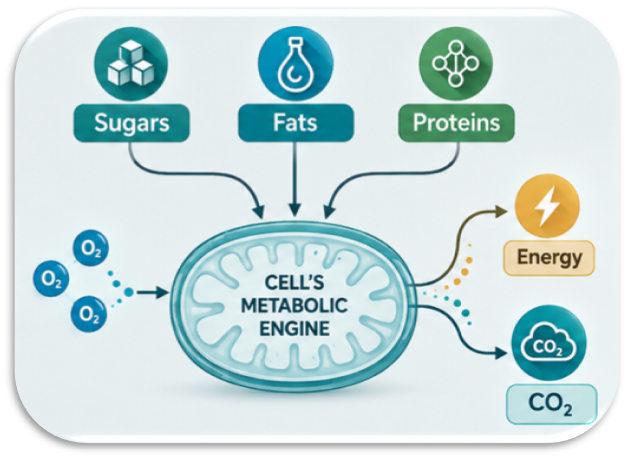
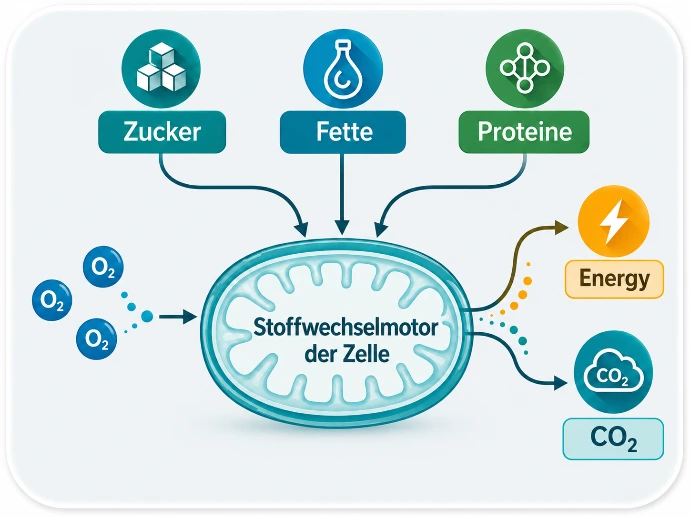
Cells metabolize nutrients that are primarily carbon-based. When nutrients are converted into energy, oxygen is consumed and carbon dioxide (CO₂) is released as a byproduct. The tricarboxylic acid (TCA) cycle is a central hub in cellular metabolism where these nutrients are processed and interconnected. During this process, intermediates are generated that feed into the electron transport chain to produce usable energy. At the same time, the cycle provides key intermediates for the synthesis of cellular components and other biomolecules. Because carbon dioxide is a direct product of these metabolic processes, measuring this gas is an important step in understanding cellular metabolism.
To directly track nutrients within this cycle, cells are supplied with nutrients labeled with a stable carbon isotope. This enables the direct quantification of distinguishable CO₂ molecules and the unambiguous identification of the nutrient sources used in cellular respiration. By directly measuring labeled metabolic output instead of relying on indirect readouts, Tiresias provides direct insights into cellular respiration and metabolic pathway activity.
How we measure cellular respiration
The Tiresias platform is a compact analytical device that determines the fraction of CO₂ production derived from a metabolized nutrient relative to total cellular respiration.
Cells metabolize nutrients that are primarily carbon-based. When nutrients are converted into energy, oxygen is consumed and carbon dioxide (CO₂) is released as a byproduct. The tricarboxylic acid (TCA) cycle is a central hub in cellular metabolism where these nutrients are processed and interconnected. During this process, intermediates are generated that feed into the electron transport chain to produce usable energy. At the same time, the cycle provides key intermediates for the synthesis of cellular components and other biomolecules. Because carbon dioxide is a direct product of these metabolic processes, measuring this gas is an important step in understanding cellular metabolism.
To directly track nutrients within this cycle, cells are supplied with nutrients labeled with a stable carbon isotope. This enables the direct quantification of distinguishable CO₂ molecules and the unambiguous identification of the nutrient sources used in cellular respiration. By directly measuring labeled metabolic output instead of relying on indirect readouts, Tiresias provides direct insights into cellular respiration and metabolic pathway activity.